

Chaos is Constant

In this environment, "flexibility" is frequently cited as a solution, but it is often misunderstood. Flexibility is not simply the ability to change a booking; it is the structural capacity to pivot operations without losing control. For many, the weakness in their supply chain isn't the market itself, but the fragmented nature of their logistics partners. When your freight forwarder, your customs broker, and your 3PL are three different companies, flexibility evaporates the moment a crisis hits. Mastering today’s market requires a shift toward in-house control: a model where your partner owns the process from the port of origin to the final mile.
The Myth of the Middleman
For decades, the freight forwarding industry relied on a "brokerage" model. A forwarder would take your order, then outsource the ocean freight to one carrier, the drayage to another, and the customs filing to a third-party specialist. In a stable market, this works well enough. However, in 2026, stability is a relic of the past. When a port strike occurs or a sudden regulatory shift happens: such as the U.S. tariffs on wood product imports seen in late 2025: the "middleman" model breaks down. The forwarder has to call the carrier, who calls the terminal, who eventually gets back to the forwarder, who finally notifies you. By then, the window for a cost-effective pivot has closed.
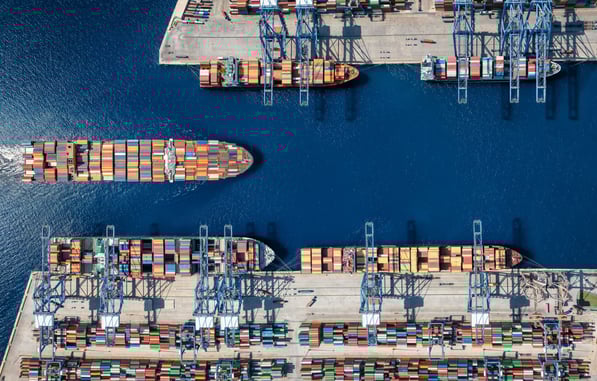
True flexibility is born from control. At AGL, we operate with an in-house philosophy. By integrating NVOCC (Non-Vessel Operating Common Carrier) capabilities, 3PL services, and in-house Customs Brokerage, we eliminate the communication silos that lead to delays and cost overruns. We aren't just managing the process; we are the process.
The In-House Advantage: NVOCC and Beyond
The most significant bottleneck in international shipping is often the hand-off between different entities. When a freight forwarder is also an NVOCC, they have direct relationships and contracts with ocean carriers. This status provides a level of transparency that "standard" forwarders simply cannot match.
- Direct Ocean Control
As an NVOCC, we have the authority to issue our own Bills of Lading and negotiate directly with steamship lines. For a shipper, this means better space protection and more reliable scheduling. When capacity tightens, you aren't at the mercy of a third party’s priority list. This direct line of communication allows for "elastic" logistics: scaling your import volumes up or down based on real-time market signals rather than rigid, outdated contracts. - Seamless Customs Integration
Customs is often where the most "invisible" delays happen. If your customs broker is a separate entity from your transportation provider, there is a natural friction in data transfer. A missed document or a slight discrepancy in a commercial invoice can lead to thousands of dollars in demurrage fees. By keeping customs brokerage in-house, we ensure that the filing process begins long before the ship hits the dock. This proactive approach is essential for high-value or specialized shipments, such as those requiring wine and spirits logistics. - Tactical Warehousing and Distribution
Flexibility also means having a place for your cargo to go when the unexpected happens. Whether it's drayage freight challenges or a need for temporary storage, having an integrated 3PL wing allows for immediate adjustments. If a retail partner delays a shipment, an integrated partner can divert that freight to a controlled warehouse rather than leaving it to rack up fees at a terminal.
You Need More Than Just "A Freight Guy"
The $20M–$500M shipper segment is often underserved by the "Big Box" forwarders who prioritize billion-dollar accounts, yet they have outgrown the "mom- and-pop" brokers who lack global infrastructure. You need a partner who offers the sophisticated tech and global reach of a giant, but with the "human-to-human" accountability of a smaller firm. In 2026, relying on a "freight guy" who simply finds the cheapest rate on a screen is a liability. You need an architect who understands the nuances of intermodal freight and can explain why shippers need more than just a freight guy. Volatility demands expertise in route optimization, equipment selection: like flatbed freight for specialized cargo: and a deep understanding of seasonal trends.
Your Gut vs. Data Driven Flexibility
While experience is invaluable, the sheer speed of market shifts in 2026 requires data-driven decision-making. Mastering volatile markets means using real-time analytics to spot trends before they become catastrophes. Internal operational discipline allows us to monitor lane performance and load-to-truck ratios with high precision. When we see a spike in demand for air freight in a specific corridor, we can advise our clients to shift modes or accelerate production schedules. This isn't guesswork; it’s the result of having all your logistics data in one ecosystem. When your logistics are fragmented, your data is fragmented. When your logistics are in-house, your data is a unified tool for scenario planning.
We ask the "what if" questions. What if fuel costs jump 15%? What if port congestion doubles in the next 48 hours? And we have the operational levers to pull in response.
Reliability Through Non-Outsourced Processes
The word "reliability" has been used so much in marketing that it has lost its meaning. In the context of The AGL Group, reliability is a functional outcome of not outsourcing our core services. When a shipper calls us with a problem, they aren't waiting for us to call a subcontractor. The person you speak with is connected to the team managing the expedited shipment or the customs filing. This "small business human feel" is what allows us to be agile. We don't have to navigate a corporate bureaucracy to change a routing; we just have to walk down the hall or join a internal huddle. This level of accountability is particularly critical in industries with tight margins or perishable goods, such as food and beverage shipping. In these sectors, a twelve-hour delay isn't just an inconvenience: it's a loss of inventory.

Navigating the Future with a Partner Who Can Move
The freight market follows cycles, but those cycles are becoming shorter and more intense. We have moved from 18-month cycles to 6-month cycles of volatility. To survive and thrive, your supply chain must be "elastic." It must be able to stretch during peak seasons and contract during lulls without breaking. By choosing a partner that controls the NVOCC, 3PL, and Customs Brokerage functions in-house, you are building a moat around your business. You are ensuring that when the market goes chaotic, your cargo keeps moving because your partner isn't waiting on permission from anyone else.
At AGL, we believe that chaos is constant, but your stress shouldn't be. By taking ownership of the entire process, we provide the reliability that modern shippers need to scale efficiently without the need for outside capital or excessive overhead.
If you’re ready to move away from the "broker-of-the-week" model and toward a controlled, flexible logistics strategy, let’s talk about how our in-house capabilities can protect your bottom line in 2026 and beyond.